



For truly green renewable power, just look up – and put your walls to work.

Everywhere I look these days there’s a familiar glint, whether it’s in a city, town, village or even out in flat, open countryside. The most common and familiar sparkle bounces off the roofs of our homes, especially the just-built ones, decked out in their shiny dark solar panels. Hi-tech and requiring energy and resources for their manufacture and operation, solar panels convert the free and renewable energy from the sun into electricity we can use. Some of this is used instantly in the home, while the rest is fed into the national power grid – solar farms feed their sunshine harvest straight into the grid – where it powers our lives.
Whenever I spot homes with solar panels, my gaze automatically drops to see what’s going on in their gardens, specifically on their walls. For it’s here that the simplest of low-tech solar harvesting can work its magic and help to power our gardening lives.
When the sun shines on a brick, stone or other solid wall (age is irrelevant; south- or west-facing is best), it absorbs the sun’s energy and warms up. This in turn heats the air next to the wall (this effect can be increased by painting a wall a dark colour). Even as we plummet into winter, low rays of sunlight hitting a wall will raise its temperature by a few degrees; in spring and summer, it’s game on for one of our finest, no-tech solar harvesters.
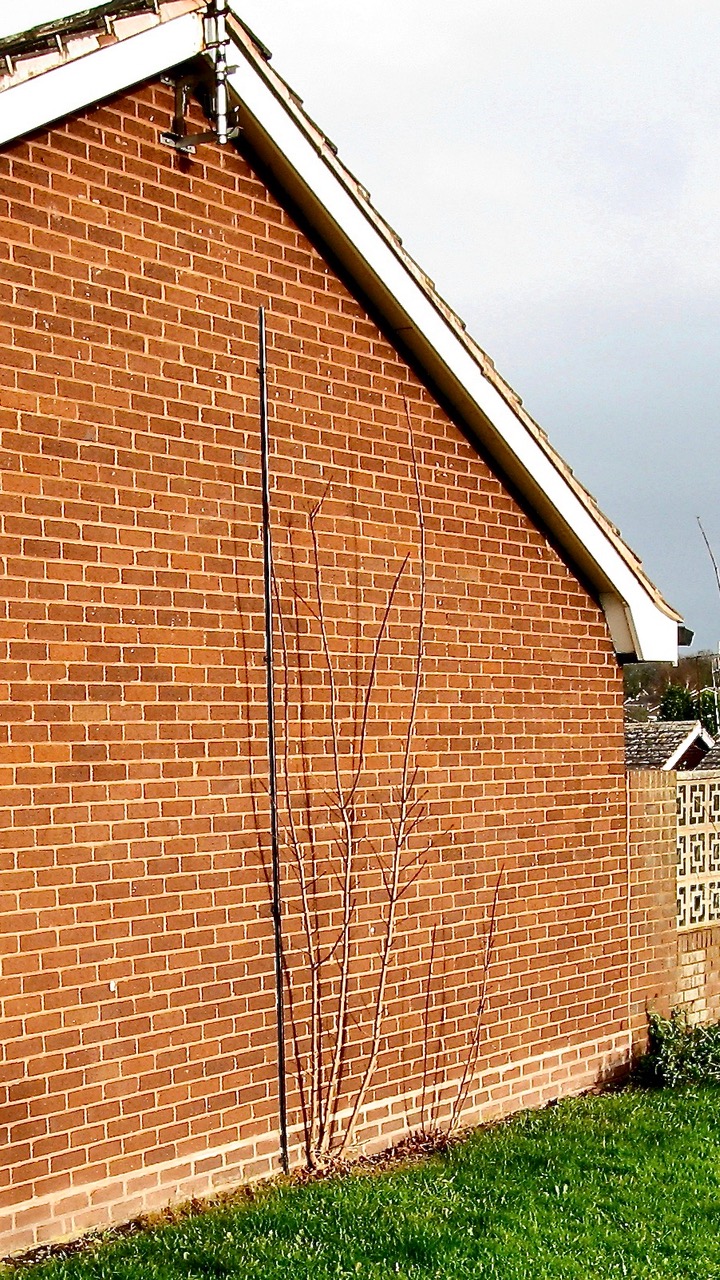
During daytime we get warm, sun-soaked walls; then, by night, we get heat-radiating walls as they release the energy they captured during the day. Stroke a wall after dark and feel it for yourself (this magic doesn’t work with timber walls or fences). This means that during the growing season, the vertical zone next to a sunny wall is slightly warmer than the rest of your garden.
This zero-tech warm zone can be utilised in myriad ways. In spring, seedlings and young plants can be grown on in pots and trays on shelves set against or fixed to a wall; the zone adjacent to the wall is one of the last spaces where frost bites – especially radiation frosts on clear, starry nights. Young plants can be shuttled indoors on cold nights, or draped with cotton sheets (avoid fleece, which sheds polluting microplastics).
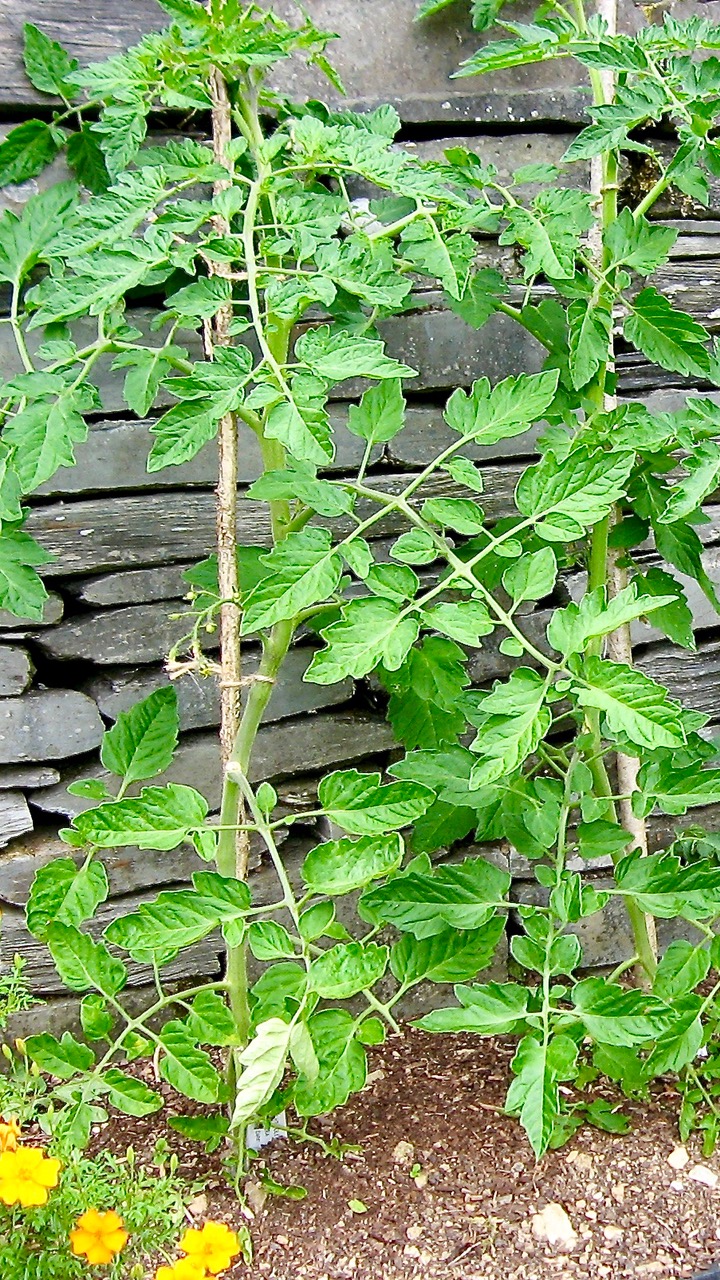
Autumn-sown sweet peas will bloom earlier when coddled next to cosy brickwork. In summer, walls can be used to grow warmth-loving crops such as aubergines, peppers and tomatoes, then leafy salad crops through the autumn and winter. Wall-trained fruits make permanent use of what a sunny wall has to offer.
Sheltered, sunny walls are also an ideal position for hanging baskets, floral or edible. If the summer sun becomes too much, climbing beans trained in front of windows cast ephemeral, dappled shade – and yield a harvest of beans to boot. Most herbs will flourish against a sun-soaked wall.

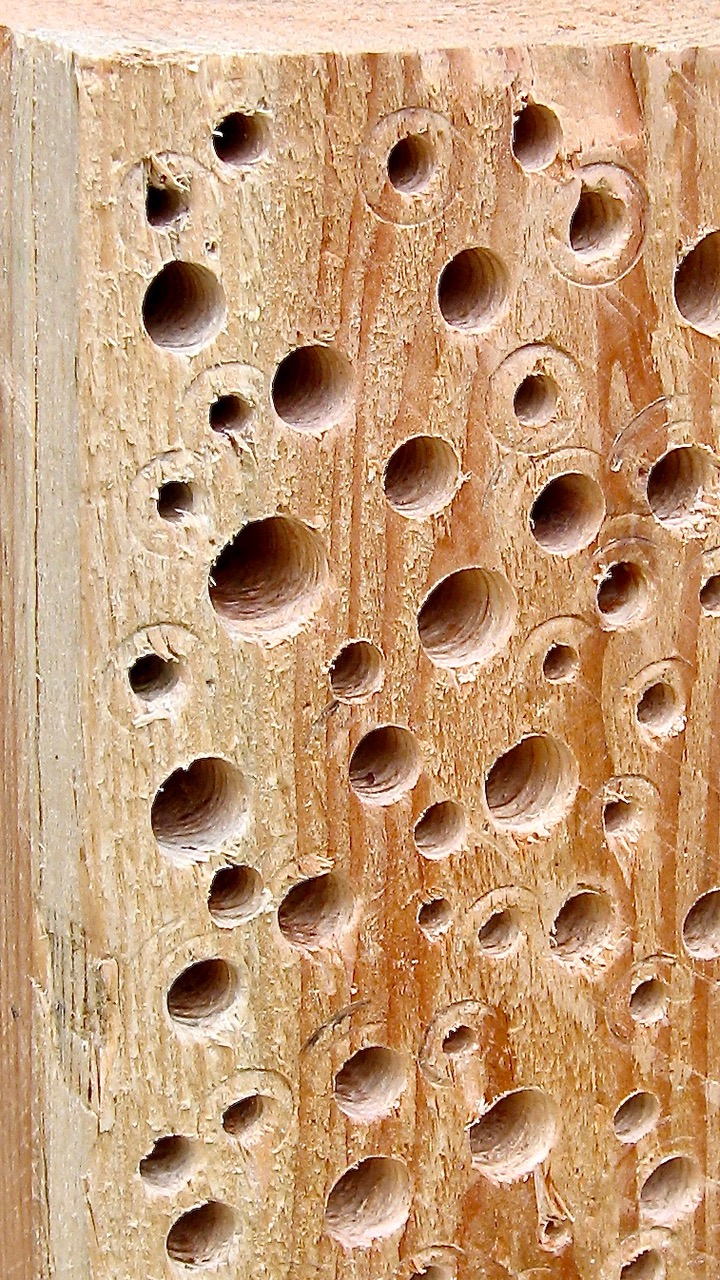
Plants grown next to a wall will buzz with wild life that thrives in the warm zone, such as hoverflies, bumblebees and butterflies. Nest boxes for wild solitary bees can be fixed to sunny walls, boosting your garden’s pollinator population. Warm walls (especially those with wide eaves above them, which create a rain-free zone) are also invaluable for drying crops such as bunches of onions and garlic, or ripening the skins of pumpkins and squashes ahead of storage.
By harnessing free and non-polluting sunshine, plain old sunny walls help us raise our gardening game; they’re our equivalent of rooftop solar panels, but they’re already part of our homes, and don’t cost us an extra penny. But if there are any pennies to spare, upgrading your walls from plain to fired-by-sunshine is easy, and will be a game-changer.
There’s an upgrade to suit every space and budget. The simplest is to add a wall greenhouse. These cover an area of wall and are designed to grow a limited number of plants fully under cover; there’s not room for you to go inside, so all the tending and planting is done by reaching in. Depending on the size, there’s space to raise young plants in the spring, grow full-size crops such as tomatoes in summer, and then follow on with winter-hardy salads (oriental and mustard greens are winners for sunlit winter walls).
Covering part of the wall with a greenhouse ups the solar ante; the air inside the greenhouse warms up quicker on sunny days and traps more warmth at night, when it radiates out from the wall itself, helping to keep frost at bay.
Enclosing an area of wall also means your plants are protected from extreme weather, such as hailstorms. Wall greenhouses come in all shapes and sizes (search ‘wall greenhouse’ to fire your vertical growing dreams), but as a general rule – which applies to all things greenhouse – go for the biggest and best, glazed with glass, that you can muster enough pennies for.
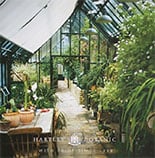
If you know you simply have to be in there yourself, among your plants – potting, plotting, sitting down with a cup of tea, daydreaming and soaking up the sun – then a more generous investment will bring you a lean-to greenhouse – the ultimate and only marginally higher-tech addition that turns a plain wall into a dynamic growing space. You can still utilise year-round sunshine to power your lean-to, which will soon become the beating heart of your garden, as well as a go-to space to sit and watch raindrops, hail, sleet and snow fly on by.
Lean-tos come in all sorts of shapes and sizes, but the same glass-biggest-best rule applies. It’s also worth thinking big on both ventilation – our summers are going to get hotter more often, so ground-level louvre vents are a must – and access generally. Spend time with your tape measure and pencil, and dream large.
Adding a greenhouse, big or small, to one of your walls is a winner on the low-tech front. We’re tapping into the same ‘green’ energy source that’s increasingly powering our lives, and turning it, without any fuss, fancy wiring or fanfare, into something that’s truly green, alive and growing – plants, which make our world a better place.
Next time you glimpse a flash of the hi-tech, check out the garden below – then imagine, with a touch of the low-tech, just how wonderful your walls could be…
Text and images © John Walker
Join John on X @earthFgardener