


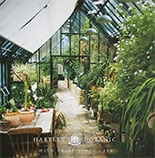


Having a Hartley greenhouse opens a lot of doors when it comes to growing plants. One of the benefits is being able to grow hardy chrysanthemums without the fear of losing them during a wet winter. My greenhouse allows me to take cuttings between March and June. These root easily after a few weeks. Then they can be potted up into 9cm pots and kept somewhere dry over winter. I use a cold frame, but a cool greenhouse is also ideal. If some chrysanthemums don’t manage to come through a horrible winter, you’ll have spares ready and waiting.

It isn’t difficult if you follow this advice. Water your plant well the day before taking cuttings, so the plant material is turgid. This applies to all plants you want to take cuttings from. Snap off a strong healthy chrysanthemum shoot from your chosen one and remove the lower leaves. Place your cuttings in a 50/50 mix of perlite and multi-purpose compost and label them. Mist the cuttings and, once they begin to grow, and then pot them up.
Pinch the top growth out to encourage bushy plants. Don’t plant them outside in autumn. Wait until the following spring. Most later flowering perennials should be planted in spring and not autumn. Chrysanthemums can be tricky to overwinter in the ground, especially in their first couple of years. You stand more chance if you leave the top growth intact after flowering, because the fading stems help to keep the worst of the weather away from the base of the plant. This applies to chrysanthemums and all later flowering perennials with stiff stems. Cut the stems back once lots of new growth appears at the base. Chrysanthemums shoot fairly early, so the end of March is usually ideal.
Hardy chrysanthemums have been out of fashion for many a year, but they are making a comeback. Recent changes in climate mean that clement autumn weather tends to stretch into November these days, so gardeners need colour for longer and chrysanthemums are perfect. They’re often the last flowers standing and many shine in November. They light up mellow late autumn days and provide colour when little else is available.
They’re a great cut flower too and growing your own cut flowers is bang on trend. Cut the stems off close to the base, strip off the lower leaves and then cut to the required length. Change the water every 2 -3 days and they will last for three weeks or more. Flower shape varies, but the single-flowered forms sustain late-flying pollinators because they fly later in the year these days. Bumblebees, honey bees and flies gravitate towards them.

The paler singles produce a discernible fragrance on still November days. ‘E.H. Wilson’, has sprays of small single flowers in lemon-white and it’s one of the most fragrant of all. It’s thought that this was introduced by Ernest ‘Chinese’ Wilson when he was plant hunting for the Arnold Arboretum in the early years of the 20th century, so it’s one of the oldest. It needs good drainage but generally persists for me. It was grown by Miss Pole of Lye End Nursery for many years so it’s a great survivor. Miss Pole was Chair of the Hardy Plant Society. I don’t advise googling her though!! You may get arrested.
In recent weeks I have made two pilgrimages to see these autumnal beauties. I trekked up to Norwell Nurseries near Newark, one of the very best nurseries in the country. They have a display garden with sandbeds and they grow and propagate excellent plants you won’t find elsewhere. The nursery holds one of the Plant Heritage collections containing 160 chrysanthemums and there are fine cultivars named after them. ‘Helen Ward’ has medium-sized semi-double russet-red flowers. Dr Andrew Ward has a larger-flowered rich-red semi-double. Both were bred at the nursery.

On November 4th I visited John Massey’s open garden at Ashwood Nurseries, just a few miles north of Kidderminster in Worcestershire. John’s Garden opens every Saturday for local charities, from February until late into the year. Two crescent beds of chrysanthemums, designed to shine in late October and November, can be seen in Adam’s Garden. It’s one of the best gardens in the country and full of choice garden plants. There is a garden centre and restaurant, so this is a grand day out for keen gardeners and lovers of spectacle. Check their website before travelling though.
The bees were enjoying the open daisies and two seemed to be favoured. ‘Mrs Jessie Cooper Number Two’ has rose-madder petals with a narrow white ring surrounding the central yellow middle. Bumblebees were enjoying this one. ‘Innocence’ is a soft-pink single that fades to blush-white was covered in honey bees. Two other singles took my eye, because they had wonderful foliage. ‘White Tower’ has wonderful foliage and flowers from top to toe. The other was ‘Winning’s Red’, a very neat brick-red.

I’m drawn to warm coppery brown and butterscotch because they match the autumnal colour palette so well. Their Latin name comes from chrysofor golden and anthemon for flower and the autumnal russets, deep-reds, oranges and golden yellows catch the mood of autumn perfectly. ‘Goldengreenheart’ was raised by Bob Brown of Cotswold Garden Flowers. Bob also introduced an eye-catching bright-pink with dark foliage, which he named ‘Bretforten Road’ after the location in Badsey near Evesham. This was the star of the show.
Most of the ones I mentioned are tall, but growing them close together should negate the need for staking. There are also compact plants with tight double flowers. They make good front of border plants. ‘Mei-Kyo’was stunning. This was sent from Japan to nurseryman Will Ingwersen in the 1950s and the name translates as Treasure of Kyoto. This information is from an excellent Hardy Plant booklet on Chrysanthemums written by Judy Barker. It’s available from the Hardy Plant Society website @ £12.00.

The mauve-pink flowers of Mei-Kyo are the size of 10p pieces, but there are several on each spray, so it looked wonderful in John Massey’sgarden because it was so bushy. It produced a bright-yellow sport which was named ‘Nantyderry Sunshine’, after Rose Clay’s garden in Wales. ‘Etna’ is a brown and golden double with similarly sized flowers and I also like the bright cerise-pink buttons of ‘Julia Peterson’ raised by Clive Hester in Gloucestershire. I think doubles aren’t as hardy as the singles so do take ‘insurance’ cuttings.

Chrysanthemums have been cultivated in China and Japan for 3000 years and possibly longer. They symbolise wealth, longevity and a peaceful state of mind and they were also associated with nobility so they find their way onto ceramics and paintings. The ‘Emperor of China’, which has dusky-pink flowers with quilled petals and foliage that darkens to plum-red in late-autumn, looks like a silver and garnet jewel. This old 19th century variety, reputedly grown by Victorian gardener William Robinson (1838-1935) in his Gravetye Manor garden in East Sussex, isa beauty! Sadly I find it tricky to keep and it also flops for me.
The first chrysanthemums arrived in Europe in 1789 when Pierre-Louis Blancard, a French merchant from Marseilles, sent a white, purple and violet form. By the mid-18th century many more had been imported and by the 1920s nurserymen were beginning to cross-pollinate cold-tolerant species to produce truly hardy varieties. These became popular in cottage gardens and grand cutting gardens alike. Let’s make them popular again!